Calendar of Upcoming Programs


Sustaining Engagement with Trusted Colleagues: An Urgent Need to Consider Earnings Tests and Their Potential Impact on the Arts in Higher Education

Royce W. Smith, Ph.D., Dean, College of the Arts, California State University Long Beach; Anthony Byrnes, Associate Dean for Student Success and Outreach, College of the Arts, California State University Long Beach; Chiara Ferrari, Ph.D., Associate Dean for Faculty, Curriculum, & Instruction, College of the Arts, California State University Long Beach

May 19 at 2-3:30pm Eastern / 1-2:30pm Central / 12-1:30pm Mountain / 11:00am-12:30pm Pacific

The recent passage of the One Big Beautiful Bill Act (OBBBA), or Public Law 119-21, enacted in July 2025 was discussed in the media largely in terms of new tax deductions, border security, and removal of energy tax credits. Nevertheless, some of the more potent impacts of the bill take the form of earnings tests that will be used to compare graduates of college and university degree programs with the median salary of high school graduates (in the case of undergraduate programs) and, for graduate programs, the median earnings of working adults aged 25-34 with a baccalaureate degree in the same field — a comparator that, for arts programs, empirically falls back to the national same-field BA median rather than state-level data. If graduates of college and university programs fall below the salary threshold of the group to which they are being compared in two out of three cycles, the programs from which they graduated stand to lose federal financial aid eligibility. Put another way, the students whose earnings will determine whether a program is flagged for federal financial aid ineligibility in 2027 graduated eight to nine years before the OBBBA existed. 

As arts-related accreditation bodies cope with their own issues and crises related to the Department of Education’s investigation of those bodies and their intrinsic “value,” discussion about these significant legal changes has been scattershot or nonexistent on many US campuses.

This webinar will explore why a “wait-and-see” approach may be dangerous for some of our most noteworthy and longstanding programs. The presentation will also outline what are admittedly few responses and reactions that we may make as deans and administrators to prepare for one of the largest federal intrusions into higher education in United States history. To be clear, we seek to be bi-partisan and factual and we do not present as subject matter experts in public law; rather, we wish to share some of the questions, obstacles, and challenges we, too, are confronting as we prepare to cope with these federal changes in ways that are sensitive to the needs of our students, staff, faculty, university, and system. Register here.


Communications Professionals May Program
From Stories to Strategy: Lessons from Seven Years of Arts Impact Reporting (Rescheduled)
May 21, 2026 at 1 Eastern / Noon Central / 11am Mountain / 10am Pacific

Over seven years, Arizona Arts’ State of the Arts | Impact Report has evolved from a “well-designed memo” into a strategic storytelling tool—earning a Southern Arizona PRSA Award of Excellence—that communicates the breadth, relevance, and impact of the arts. This session explores how the report was developed, how themes emerge organically from artistic work, and how narrative can align with institutional priorities such as student success, faculty work, and community engagement. The presentation also reflects on ongoing efforts to provide clearer context for research in the arts through collaboration and story-driven approaches. Charlie Snyder, Director of PR, Marketing & Communications, Arizona Arts / College of Fine Arts, University of Arizona will share. Register here


Communications Professionals Online Programs
All programs will be hosted online the third Thursdays of January, February, March, and April. 
Dates: January 15, February 19, March 19, April 16
Time: 1:00 Eastern / 12:00 Central / 11:00 Mountain / 10:00 Pacific. Online programs are 60 minutes.
Programs may include topics such as Marketing the Arts in a Changing Technological Environment, The Increasing Importance of Authentic Branding, How Generative AI is Shaping Marketing Communications, User Generated Content to Build Trust and Engagement, Short Form Video Content, Data-Driven Marketing Strategies in Higher Ed and other topics to be determined with member input. Invitations for each meeting will be sent. Registration is free for members of each affinity group or $80 per session for non-members. Join this affinity group now.


Advancement Officers Online Programs
All programs will be hosted online the last Tuesdays of January, February, March and April.
Dates: January 27, February 24, March 31, April 28 
Time: 4:00 Eastern / 3:00 Central / 2:00 Mountain / 1:00 Pacific. Online programs are 60 minutes.
Programs may include topics such as Gift Planning, Capital Campaign Success Stories, Building Team Culture, and other topics to be determined with member input. Invitations for each meeting will be sent. Registration is free for members of each affinity group or $80 per session for non-members. Join this affinity group now.

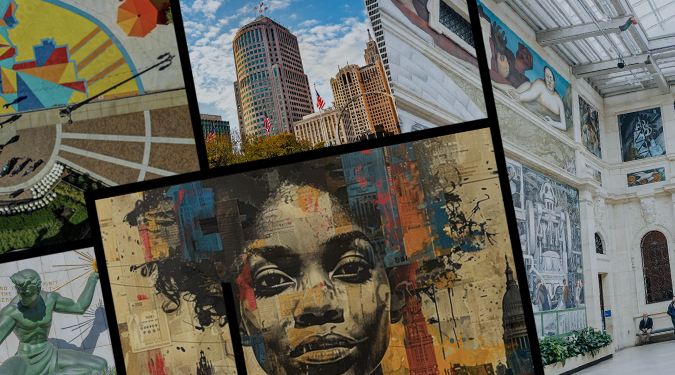
62nd Annual Conference
Tuesday, October 6 - Thursday, October 8, 2026
Detroit, Michigan
A printable Save the Date flyer can be found here.